
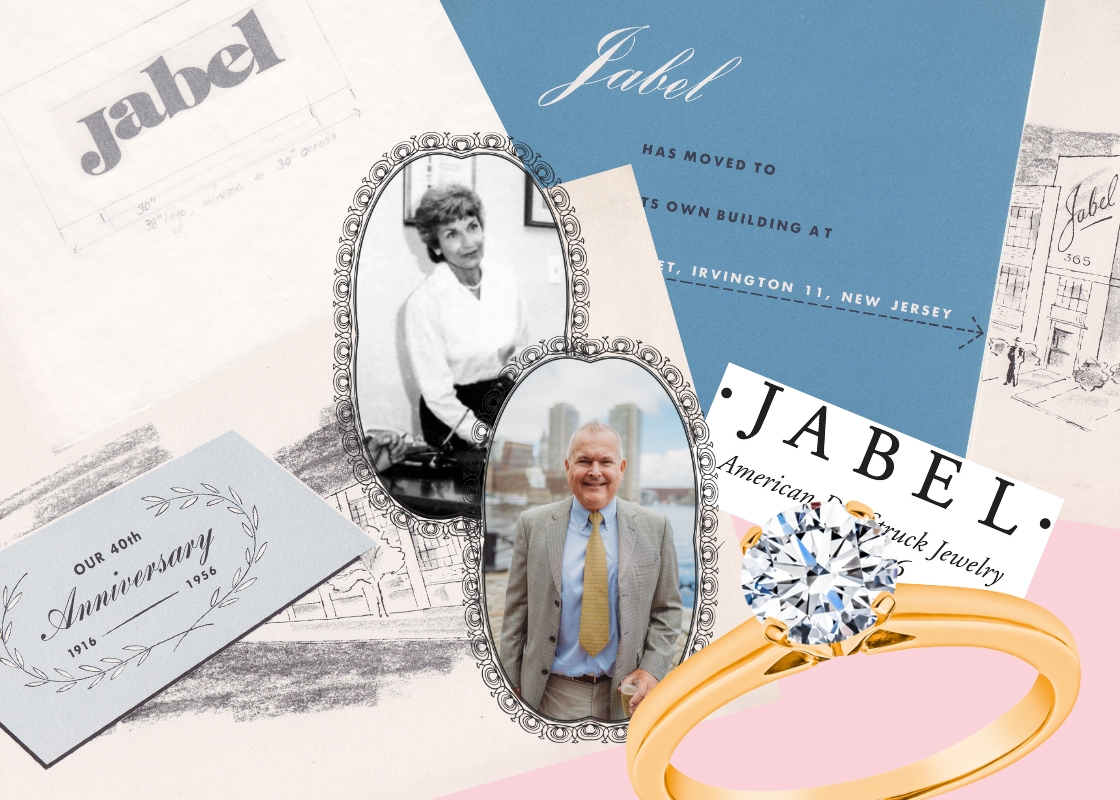


In 1916, J.J. Abelson established the Jabel Ring Manufacturing Company in Newark, New Jersey. Initially a young stone setter, he envisioned enhancing die-struck jewelry, a popular method of jewelry making during the early 1900s. J.J. sought to re-envision how these rings were designed. He wanted to create solid shanks that that would minimize excessive solder points and focus on heirloom quality solid jewelry rather than hollow designs. Accomplishing this would elevate the structural integrity of the rings. When his vision became a reality, he significantly improved the quality and gave jewelry stores access to superior rings to stock in their cases for shoppers.
Eventually, June, J.J.’s daughter, joined the company, sharing her father's commitment to die-struck jewelry. A strong advocate for education, she often attended events with her box of educational tools and dies. Her passion for promoting die-struck jewelry and teaching jewelers about the process helped the company tackle the rising trend of casting, a more budget-friendly jewelry-making method. Even after June's passing, her influence persisted. Additionally, she was a staunch supporter of women in the jewelry industry and an early member of the Women’s Jewelers Association (WJA).
Following June’s death, Jabel faced difficult times as die-struck jewelry became less recognized, with many jewelers opting for lower-density cast jewelry alternatives. By 2007, the company was nearing bankruptcy. However, David Connolly, a longtime admirer of Jabel, acknowledged its historical significance and took decisive action. By late summer, Jabel was back in operation, working to rebuild its network of independent fine jewelers.
Today, Jabel remains committed to its origins, embodying the same values it upheld in 1916; quality without compromise has always been, and will continue to be, the guiding principle of Jabel.
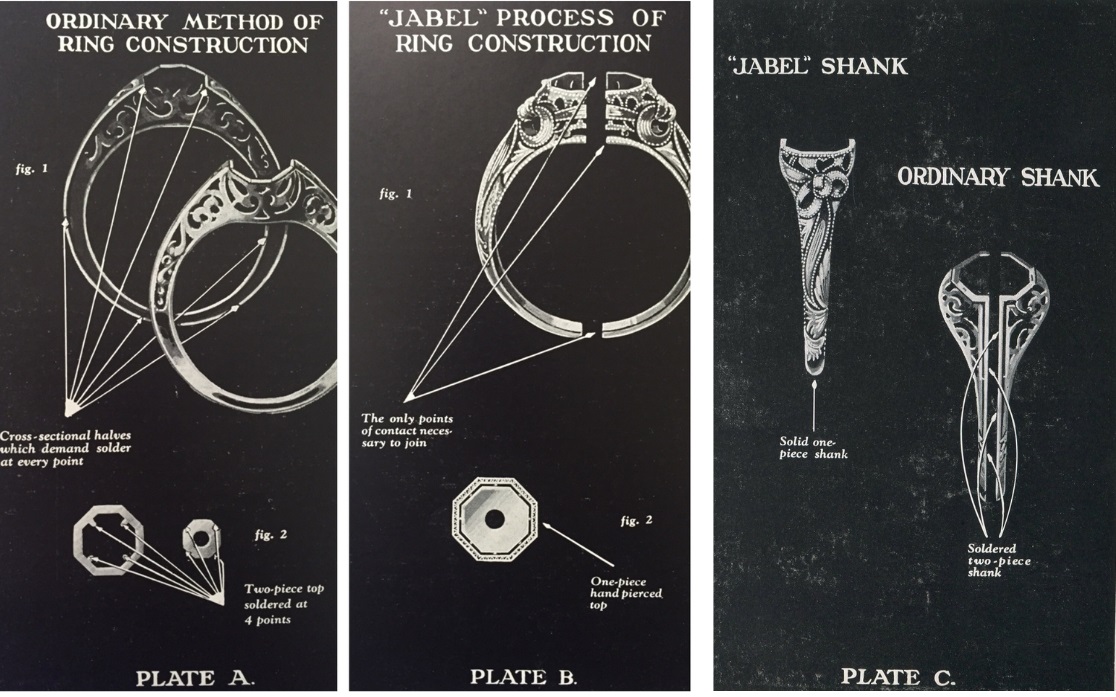
When we examine the differences between early 1900s traditional die-struck rings and J.J. Abelson’s Jabel rings, we zero in on the creation of ring shanks, or bands. In that era, traditional die-struck bands were formed by striking the ring with dies from both the front and back. These two halves were soldered together, resulting in a ring that appeared solid, yet actually featured a hollow core with solder points along its circumference.
- Weaknesses of Traditional Bands:
- The solder points acted as weak spots.
- Susceptible to damage and everyday wear.
- The absence of a solid center made the band weak.
J.J. Abelson tackled this challenge by designing solid band rings from straight die-struck gold lengths, enabling jewelers to shape the band up and around the natural shape of a finger. As ring designs grew more intricate, dies were sometimes struck to create a solid left and right side, with soldering occurring only at the base of the ring for sizing and at the head, where the diamond setting was attached.
After more 110 years, the results speak for themself, heirloom rings that can still be worn to this day. It’s that spirit of quality jewelry that is finding new life in today’s world of sustainability. Investing in a ring that will last for generations, with minimal repairs and restorations.
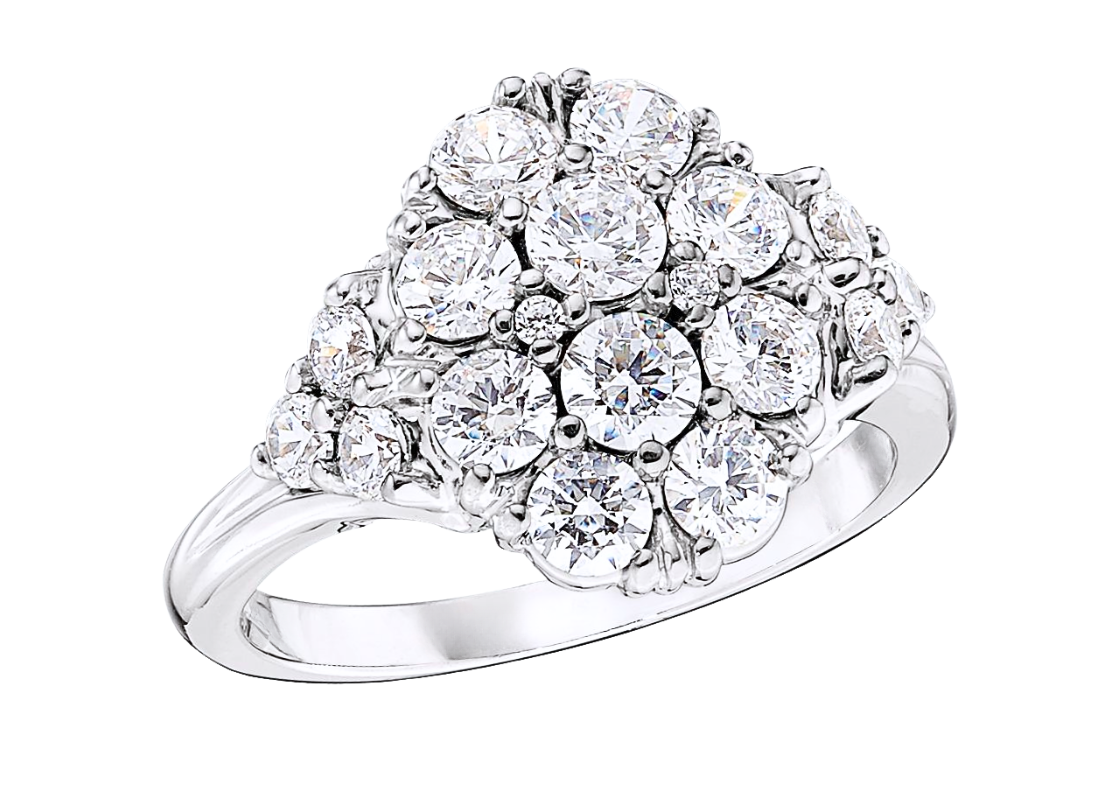
Furthermore, the Jabel spirit of enhancing existing jewelry has persisted over the decades, resulting in the creation of exquisite earrings, pendants, and bracelets. A standout feature of the collection are the diamond cluster jewelry designs. This collection is meticulously designed with a domed setting that enables the diamonds to be closely nestled together, eliminating intrusive prongs. This thoughtful design allows light to flow naturally through the diamonds because of the angled setting, showcasing their inherent brilliance.
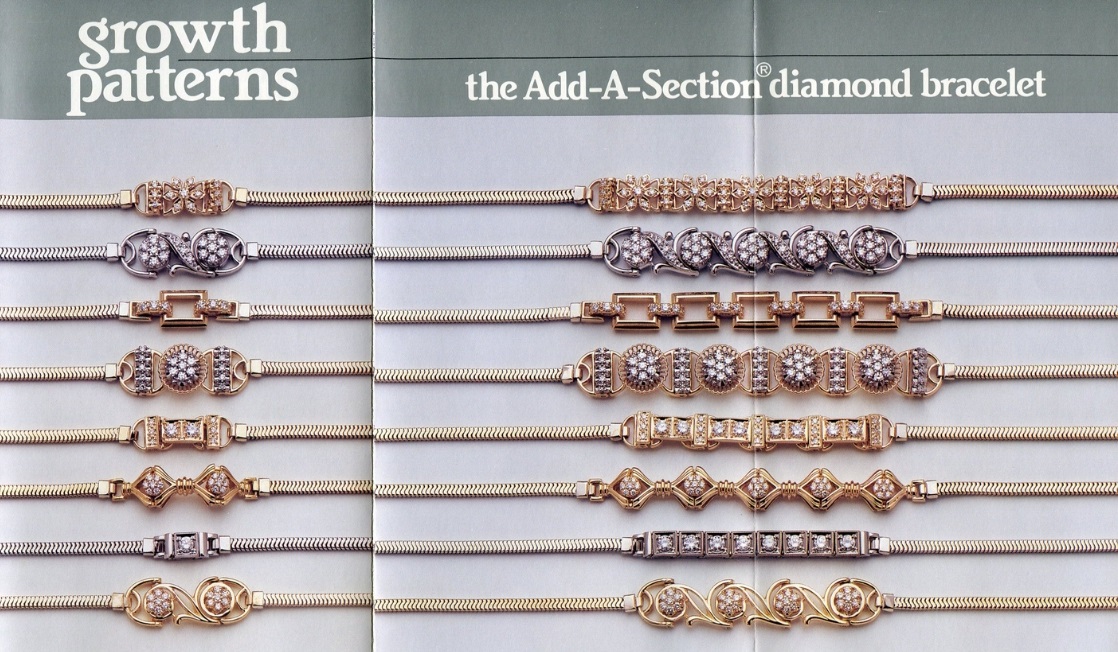
Another illustration of Jabel's creativity is the Add-A-Section bracelets. These innovative designs make fine jewelry a luxury that is accessible to a broader range of shoppers. Instead of purchasing a full diamond and gold bracelet, customers begin with a single decorative link attached to a gold-filled chain and clasp bracelet. As significant milestones or personal indulgences occur, additional links are added to the bracelet, ultimately replacing the gold-filled chain with a stunning piece of jewelry. Once all the links are in place, decorative clasps can be added for a finishing touch.
From its inception, Jabel has been a groundbreaking force in the jewelry industry, providing both jewelry stores and their customers with access to top-quality pieces. If you're interested in exploring the collection, click the link to locate an independent fine jewelry store near you.